PyCon US 2026 Recap: Teaching Kids Real Python with an RPG Coding Game (and Why It Still Matters in the AI Era)
Last week, my co-founder Tony and I flew from Pittsburgh to Long Beach, California for PyCon US 2026. For anyone unfamiliar, PyCon US is the largest Python conference in the world. Every year it brings together thousands of people who use Python across all kinds of fields, from software engineers and educators to researchers, data analysts, and executives at companies of every size.
It was the first time Tony and I went as speakers. Our proposal was accepted at the PyCon US Education Summit, where our talk was titled "Learning Python Through KangaCode: How an RPG Structure Increased Focus and Self-Directed Learning."
This post is part trip recap, part product reflection, and part preview of some interviews we recorded on the conference floor. The question we asked is one everyone seems to be debating right now, no matter what field you're in: does anyone still need to learn Python in the AI era?
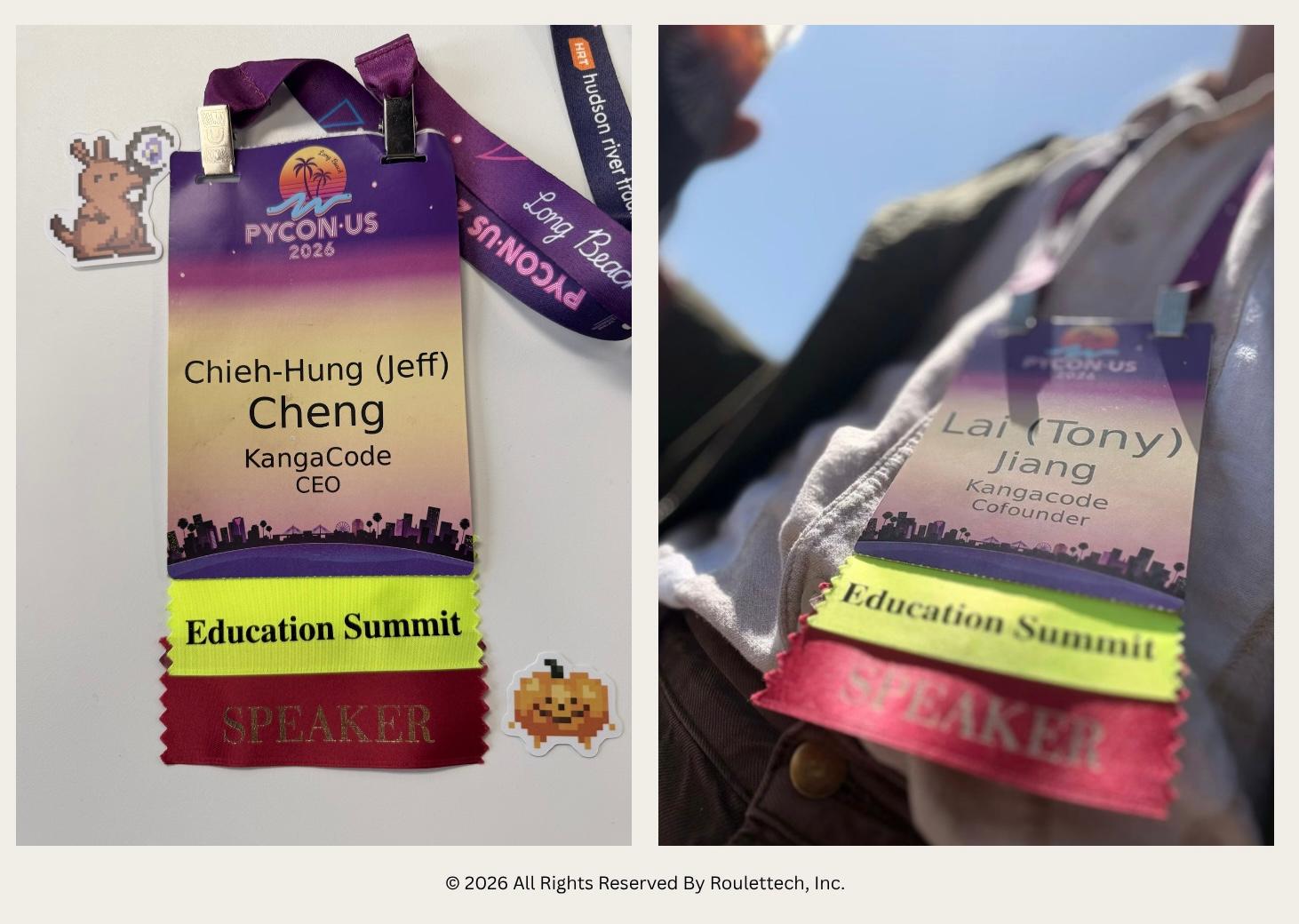
Our PyCon US 2026 badges (Education Summit + Speaker)
When We Got the Acceptance Email
April 27, 11:24 AM Eastern Time. Tony and I still remember the exact moment the acceptance email landed in our inbox.
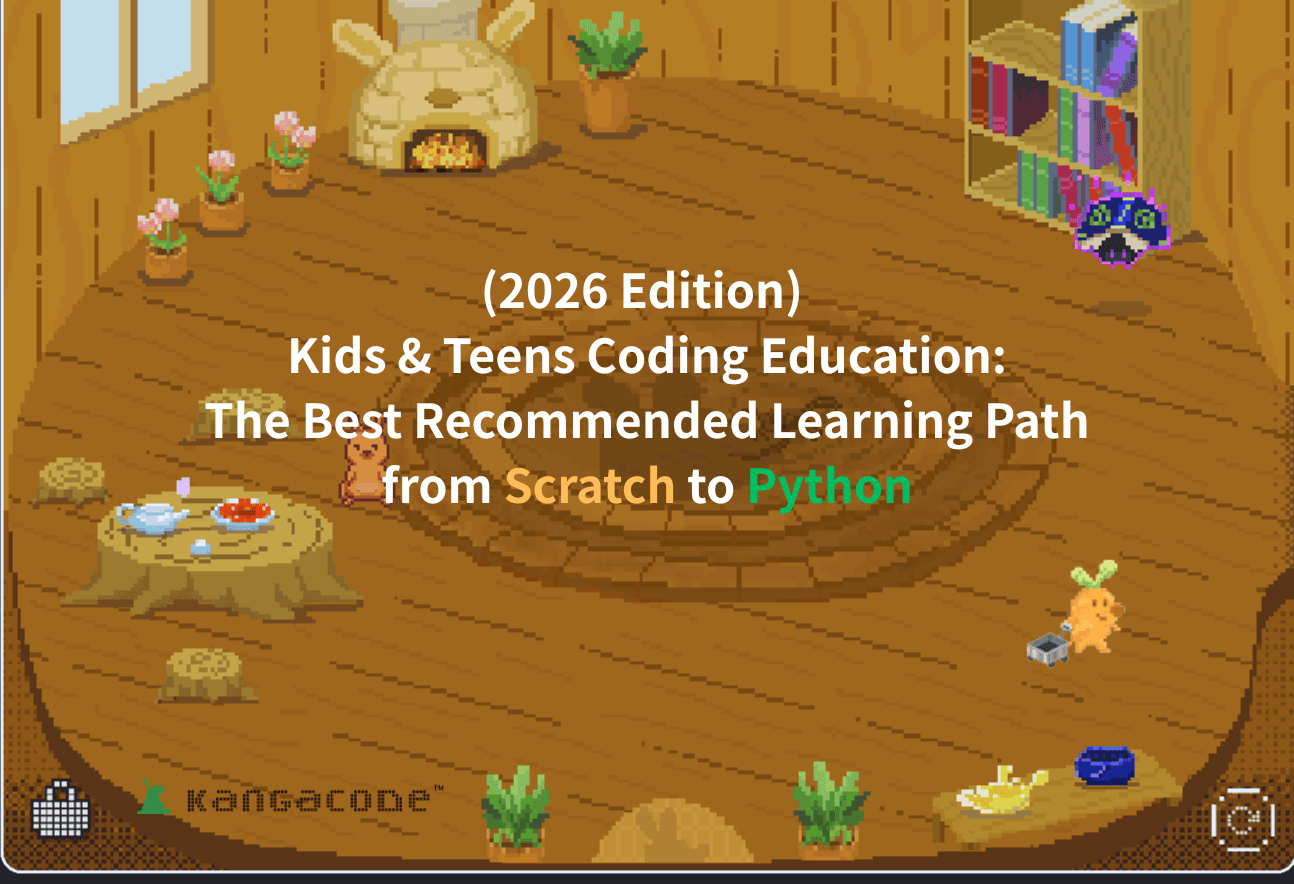
KangaCode is the platform we've been building for the past year. It's a Python learning software (coding game) designed for kids, teens, and beginners. It uses an RPG adventure game structure to teach real programming and computer science concepts, while keeping kids actually engaged the whole time.
Getting accepted to speak at PyCon US Education Summit meant we'd get to share a year of work with a room full of people who really care about teaching Python to learners of all ages. That email made our week.
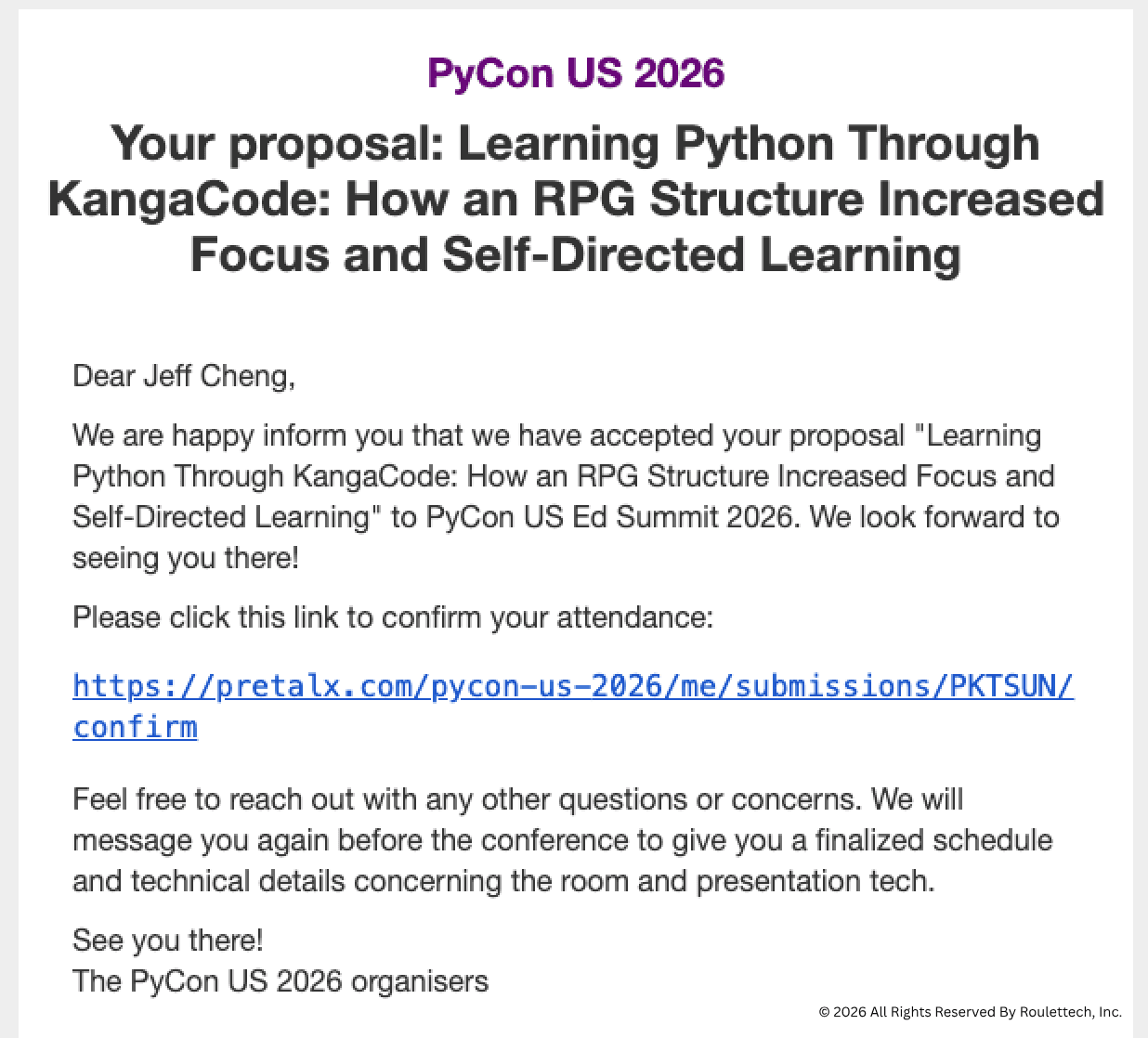
PyCon US 2026 Education Summit acceptance email screenshot
Our First Time Speaking at the PyCon US Education Summit
The Education Summit happens the day before the main PyCon conference begins. It's a focused event for people in Python education: K-12 teachers, school district administrators, edtech leaders, university faculty, curriculum designers, and anyone else who teaches Python or uses it in their work.
Our talk walked through how KangaCode uses an RPG curriculum structure to teach Python. There are quests, characters, progression, gear collection, skill management, and monster fights. All of it is designed to keep kids engaged and make the learning feel less like a chore. The result is that a language most kids would normally find intimidating becomes something they actually want to open during their free time.
Speaking at PyCon US 2026 Education Summit (Tony left, Jeff right)
We also made the difference between KangaCode and block-coding tools clear. Scratch is great for early exposure to logic and computational thinking. KangaCode goes a step further. It teaches real Python, the same language people use to build production software today. So even though kids feel like they're playing a game, the further they progress, the more real Python skills they take with them. In the AI era, that distinction matters.

A live demo of the KangaCode RPG coding game
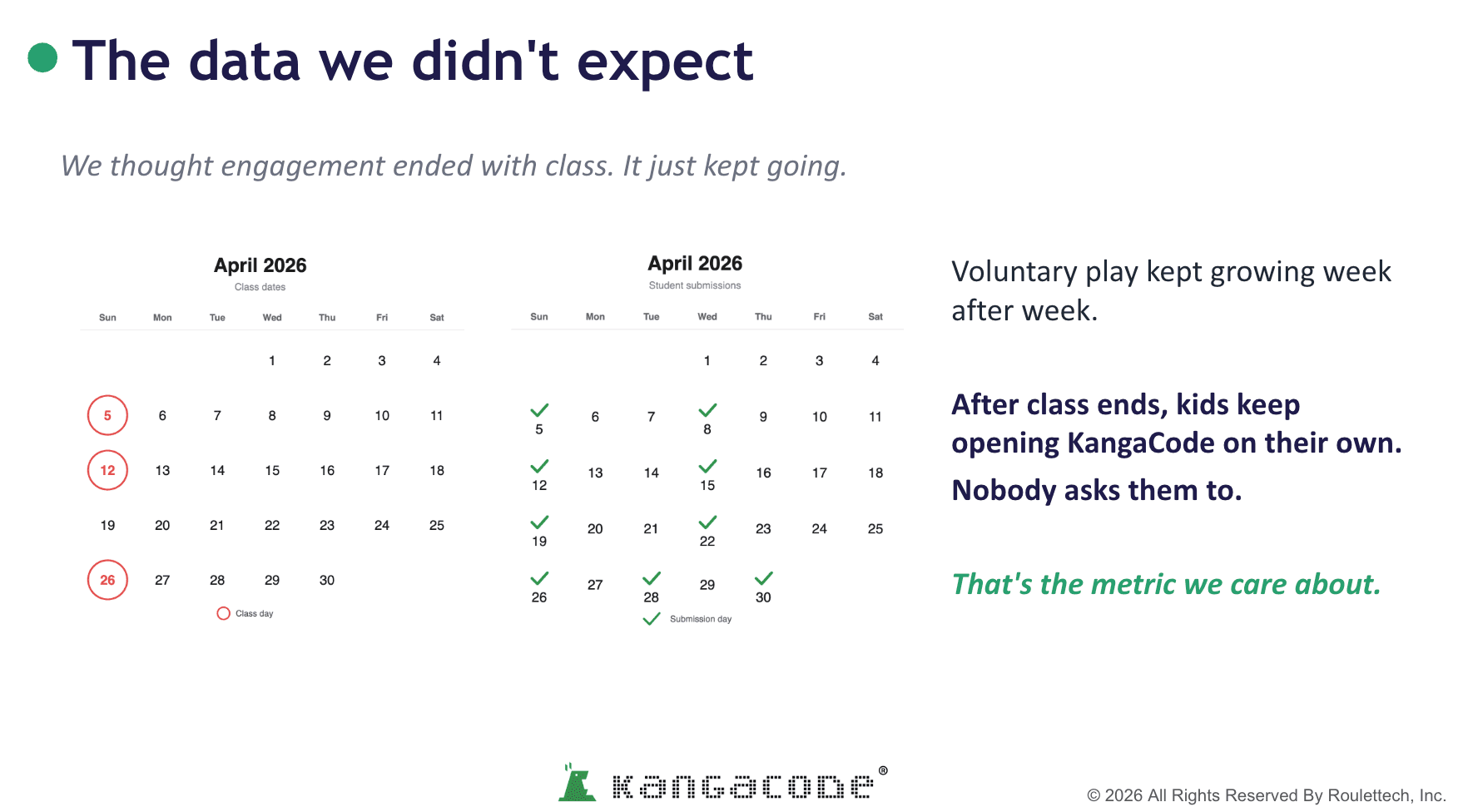
We shared parent feedback from the past year. Stories of kids opening KangaCode at home without being asked. Kids asking to play instead of being told to practice. We also walked through examples of why K-12 students learning real Python is less hard than people assume, and why a lot of them pick it up faster than expected when the structure is right.

The slide here gives you a sense of what we shared. If you'd like to watch the full session, the official recording will be released by PyCon US Education Summit shortly.
The Best Part: People Actually Liked What We Built
The most unexpected thing happened after the talk.
A lot of people came up to chat. They wanted to share their own experiences, ask questions, give us feedback, and tell us they liked KangaCode. One dad came up, shook our hands, and said:
"I can't wait to fly back and have my daughter try it!"
Honestly, hearing that made us really happy. We actually ended up interviewing him too. The questions we asked are the same ones a lot of people have been wondering about lately. You'll find them later in this post.
We've put a lot of time and energy into KangaCode, all because we want to create real learning value for students. So hearing that kind of feedback in person hits differently. Especially when you remember that earlier in this journey, plenty of people told us we were wasting our time, or just didn't believe in what we were trying to do.
The community at PyCon US was the complete opposite. People were warm, generous with their advice, and full of encouragement. That meant a lot to us.
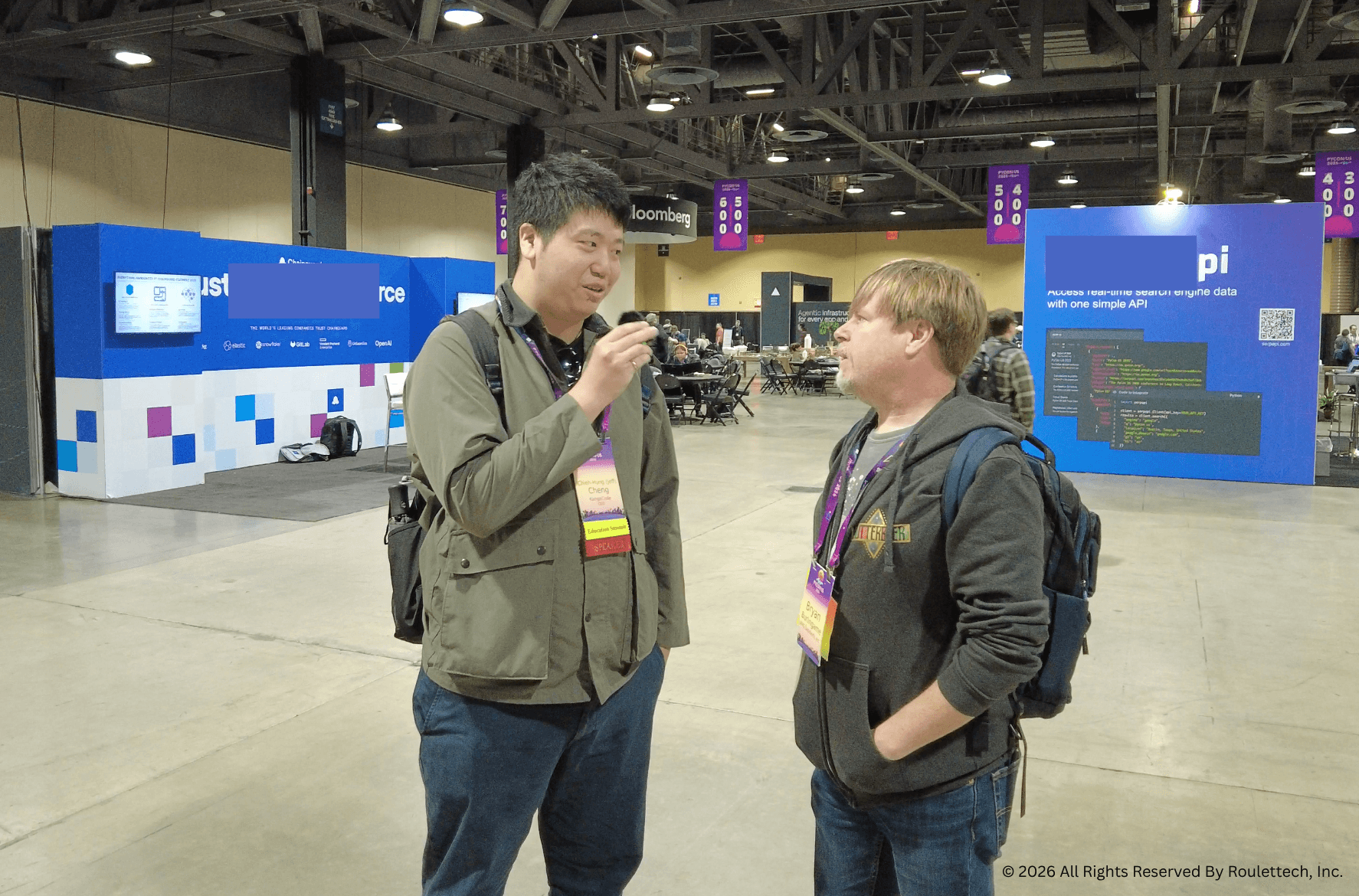
With the dad who couldn't wait to share KangaCode with his daughter (photo used with permission)
Talks We Liked
Outside of our own talk, we tried to catch as many sessions as we could.
One we really liked was "GPU Communications for Python" by NVIDIA engineers Benjamin Glick and Michael Yh Wang. They introduced two GPU communication libraries they're building: NVSHMEM4Py and NCCL4Py.
What that means: these libraries let people working in AI/ML and high-performance computing move data between multiple GPUs at high speed, without dropping down to CUDA C++ for the low-level code. Everything stays in Python.
What we found interesting is that this is NVIDIA doing it. One of the companies leading AI infrastructure is making Python the language developers use to work with their most advanced hardware. Sitting in that room, listening to engineers talk about how to make GPUs faster in Python, was a pretty solid answer to a question we'd been thinking about all week:
Does anyone still need to learn Python in the AI era?
On-the-Floor Interviews: Do We Still Need to Learn Python in the AI Era? Will AI Replace Software Engineers?
We brought a small camera this time and took the chance to interview a wide range of PyCon attendees. We asked three questions everyone seems to be debating right now:
- With AI getting this good, do people still need to learn Python?
- Will AI actually replace software engineers?
- Would you encourage your own kids to learn to code?
We talked to people at random throughout the conference. The backgrounds were all over the map: working software engineers, data analysts, banking executives, researchers, and people from a bunch of other industries who use Python every day. Different ages, different career stages, different opinions.
Honestly? Some of the answers will surprise you. A few people were extremely blunt. Several gave answers that go against the usual story you see online. Others raised points we hadn't even thought about.
After these conversations, we came away with a more complete picture of what it means to "learn coding in the AI era." Some answers confirmed what we already believed. Others made us question a few assumptions. We'll share the full responses in the videos.
We'll be releasing edited interviews on our social channels over the next few weeks. If you have an opinion on these questions, you'll probably want to see what working Python practitioners had to say.

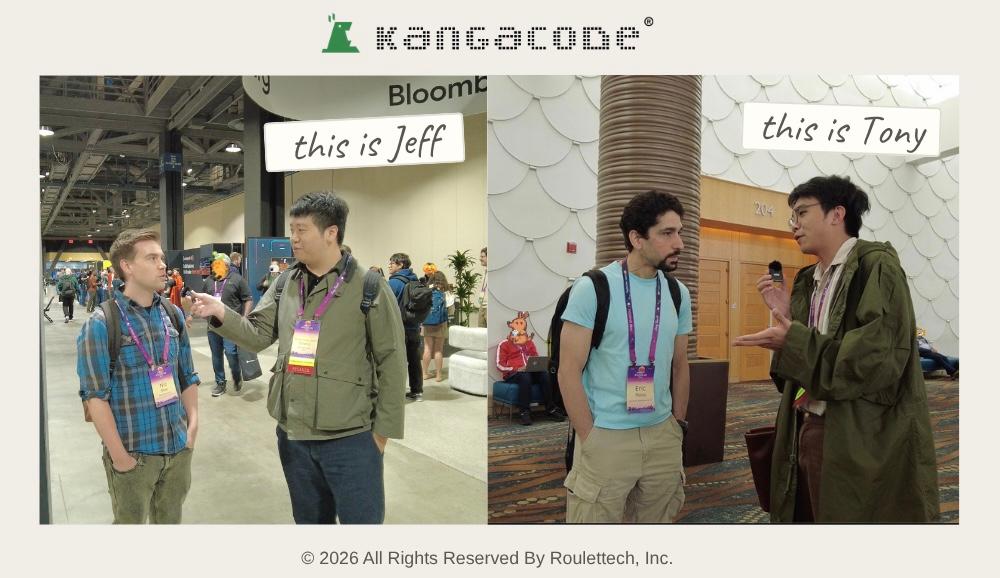
Tony interviewing PyCon US 2026 attendees on the conference floor
Wrap-Up
PyCon US 2026 was a great experience. The community is open and warm, and there's something contagious about being in a room full of people who are seriously committed to the work they're doing.
We learned a lot on this trip. Conversations with educators about teaching coding at different age levels, talks with other founders about the realities of running a product company, hearing how Python actually gets used across different industries. Every one of those conversations added a layer to how we think about what we're building.
We also made a lot of new friends. Some of those connections might lead to collaborations. Some are just people we enjoyed talking to. Both kinds matter.
The best part was getting to share what KangaCode does with a much wider audience, and seeing for ourselves that it really does help people, and that people really do like it. For a product still in its early stages, that kind of feedback isn't just nice to hear. It's real motivation to keep going.

See you at PyCon US 2027, if we get the chance. ✨
Stay Connected
If this recap was useful, or if you want to catch the interview series as it drops, follow KangaCode here:
- 🌐 Website: kangacode.ai
- 🎬 YouTube: @KangaCode
- 📘 Facebook: kangacode.taiwan
- 📷 Instagram: @kangacode_taiwan
- 💼 LinkedIn: KangaCode
- 👥 Discord Community: Join here
Thanks for reading.
Have questions or want to chat? Email us at info@kangacode.ai
🌏 中文版本請點這裡 / Read this post in Traditional Chinese Version →